exhibition
All ProgrammeInfo~Angel: 40 years of peace movement
Looking back at the birth of Vredeshuis Aalst in 1986
This edition of Info~Angel is compiled by Vredeshuis Aalst as part of the take-over at NW, marking the organisation’s fortieth anniversary.
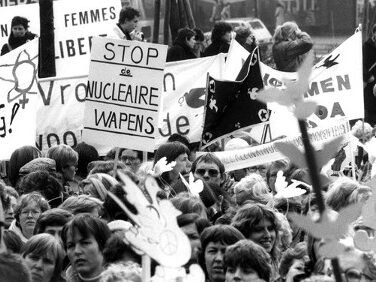
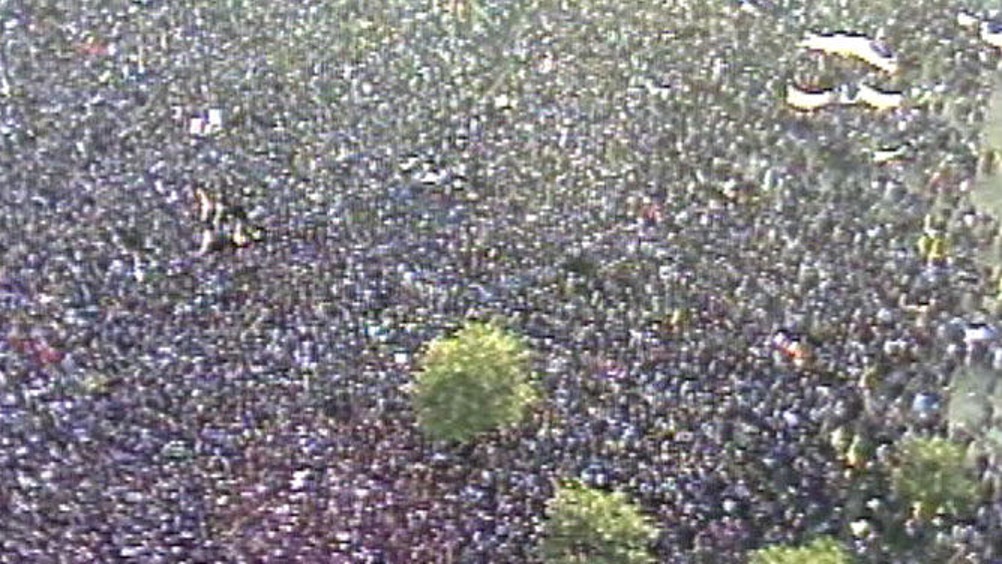
In 1979, in response to the deployment of Soviet SS-20 missiles in Central Europe, NATO adopted a two-track policy: offering negotiations on arms reduction while preparing to deploy nuclear missiles in Western Europe. The decision prompted mass demonstrations across the continent. In Flanders, VAKA committees sprang up to organise protests against nuclear rearmament. On 23 October 1983, an estimated 400,000 people travelled to Brussels to demonstrate, judging by the number of train tickets sold and buses hired. Among the slogans that day was a blunt demand: ‘Bloody hell, get rid of those bombs!’ It remains the largest public demonstration in Belgian history.
It was against this backdrop that Dr Jef De Loof and 32 others founded Vredeshuis Aalst, a meeting place for people committed to peace, regardless of their political, religious or philosophical convictions. Its founding principle was that peace and cooperation between East and West, North and South, should take precedence. On 8 November 1986, Vredeshuis officially opened its doors on Esplanadestraat, later moving to Zonnestraat. Hundreds of artists and speakers would pass through the house, alongside thousands of supporters. Its activities ranged from discussion evenings, lecture series and language courses to children’s workshops, walks, excursions, skiing trips, torchlight processions and circles of silence. There was also the Father Daens Peace Run, a quarterly magazine and an annual Peace Prize. Vredeshuis offered a space in which opposition to war could be practised, debated and sustained through collective action.
Today, the peace movement finds itself on the defensive once again. As Trump, Putin and Netanyahu assert the logic of military force, diplomacy recedes and international law is increasingly disregarded. NATO member states have committed to raising defence and security-related spending to 5 per cent of GDP by 2035, a shift that threatens to further squeeze investment in social security, education, international solidarity and peace work.
What can the history of Vredeshuis teach us about resisting the current arms race and the normalisation of militarism? How might a peace movement build public support in a political climate increasingly organised around security and deterrence? Looking back is not simply an exercise in nostalgia. It also means asking how the infrastructures of solidarity built in the past might help us imagine, and organise for, different futures.
07.11.2026-18.12.2026
Related programme